Project Context
Design and propose a comprehensive business strategy and innovation plan to increase the number of ticket purchases through SL’s mobile application while decreasing sales through agents.
Question of Design
What business transformation will enable SL to best understand their active customers to boost mobile app ticket purchases?
Approach
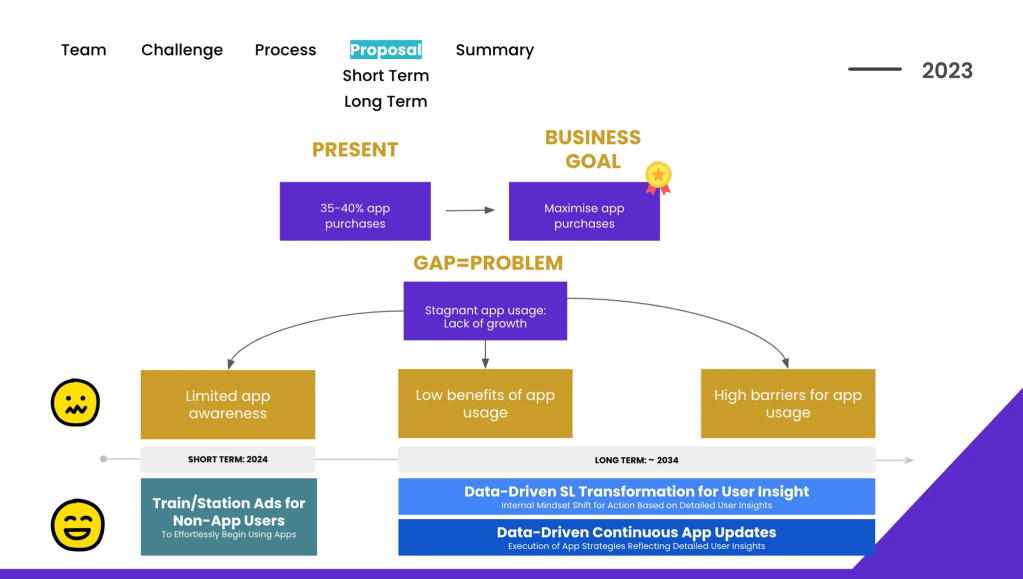
Summary of the Problem and Proposed Solutions
Current Situation:
- Currently, 35-40% of ticket purchases are made through the app.
- The goal is to increase app usage, but growth has stagnated.
- Key issues include:
- Lack of awareness about the availability of 30-day tickets in the app.
- Perception that the app does not provide sufficient value.
- High barriers for some users, such as lack of tech skills, preference for cash payments, or being elderly.
Proposed Solutions:
Short-Term:
- Increase Awareness: Launch a marketing campaign within Stockholm’s public transport system to raise awareness about the app and its features among active SL users.
Long-Term:
- Enhance App Value: Develop new features that align with current societal trends to make the app more valuable to users.
- Data-Driven Development: Collect more data on app usage to inform decisions on feature development. SL needs to become a data-driven company to ensure that new features are relevant and desirable.
Solution #1: Short Term: Grow Awareness to Boost app usage
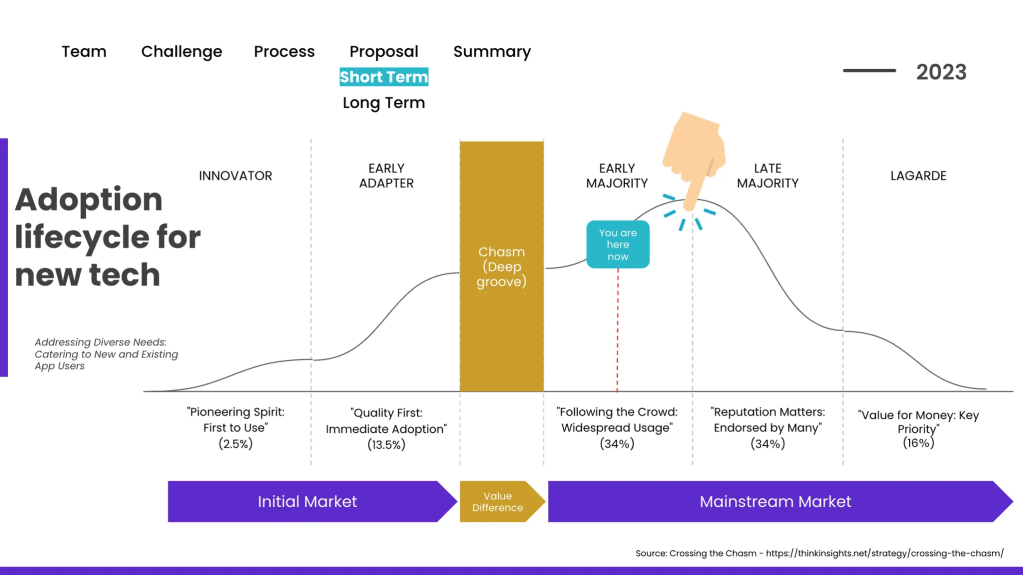
SL has introduced new technology with the launch of the app and recently phased out old technology by removing ticket booths. Currently, app adoption stands at approximately 35-40%. According to the innovation theory, specifically the Technology Adoption Lifecycle, SL is at the “chasm” stage. This is consistent with our observations and research, indicating a “following the crowd” trend in current adoption patterns. To achieve exponential growth in app usage, strategic initiatives are necessary to bridge this chasm and drive widespread adoption.

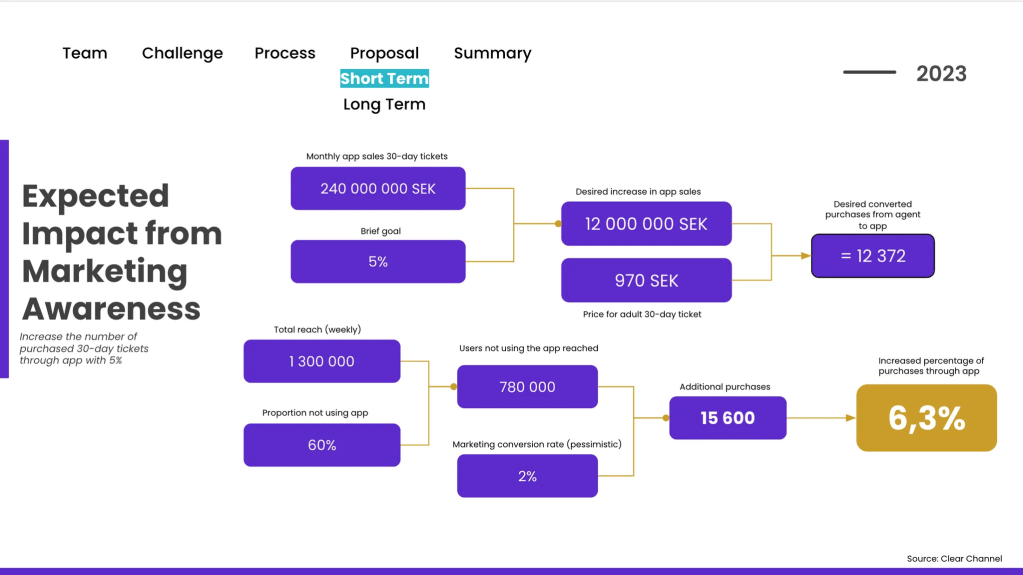
Cost Calculation #1: Short Term: Campaign
Solution #2: Long Term: Transform to a Data-Driven company

Implementing Successful Business Transformation
To successfully launch new transformative products, the company must evolve accordingly. As Clayton Christensen outlines in “The Innovator’s Dilemma,” transformation requires a holistic approach. This can be guided by the Three Pillars of Business Transformation—People, Process, and Technology—along with Governance, as proposed by Dr. Justin Bracken. Here’s how each pillar applies to SL:
People:
- Proactivity and Adaptability: Transformation necessitates a proactive, adaptive mindset open to exploring new opportunities and directions.
- Cultural Shift: This includes fostering a culture that emphasizes cross-functional collaboration and reviewing internal resources.
- Focus on Analytics: Prioritize strengthening the analytics team and breaking down silos between departments.
- Data Literacy Training: Ensure every department receives training to improve data literacy.
Process:
- Collaboration Across Departments: Effective business transformation impacts all departments and relies on robust collaboration.
- Prioritization of Data Collection and Analysis: By focusing on data collection and analysis, SL can enhance user experience through personalization.
Technology:
- Leveraging Existing Technological Shifts: SL has already made significant technological advances. The challenge now is to integrate these with the other pillars.
- Avoiding “Overshooting”: Christensen warns against expecting too much change too quickly. SL’s removal of ticket booths serves as a cautionary example of this pitfall, highlighting the need for comprehensive transformation.
Governance:
- Building Trust: Establishing trust in data and market trends is crucial. While concerns about customer privacy exist, modern users are generally accustomed to data collection, often approving tracking as standard practice.
- Ensuring Cybersecurity: As SL transitions to a data-driven model, robust cybersecurity measures are essential to protect user data.
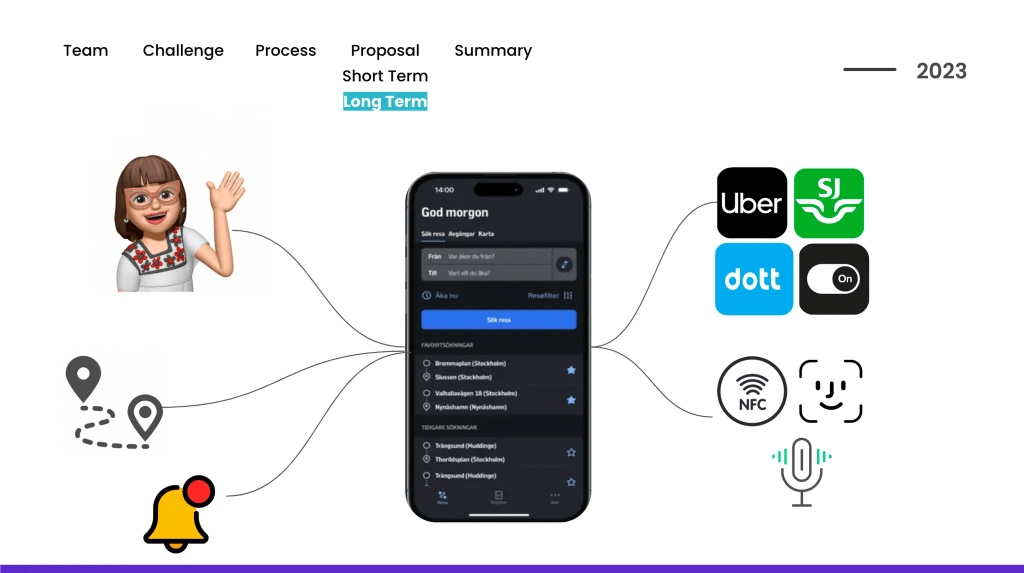
Business Opportunities through Data-Driven Transformation
Transforming into a data-driven company will unlock numerous business opportunities for SL, making them more feasible and desirable with the support of data. Here are some examples:
- Personalized Account-Based Service: By introducing an account-based service, SL can personalize the user experience and simultaneously collect valuable data.
- NFC Technology Integration: Implementing NFC technology will allow users to top up their physical cards via the app, enhancing convenience.
- Partnerships with Ride-Sharing Companies: Collaborating with other data-driven ride-sharing companies can create synergies and expand service offerings.
While the feasibility and desirability of these solutions will become clearer post-transformation, being data-driven will provide the necessary insights to prioritize and implement the most effective strategies. Additionally, this transformation will open up further opportunities for collaboration with business partners and the integration of future technologies.
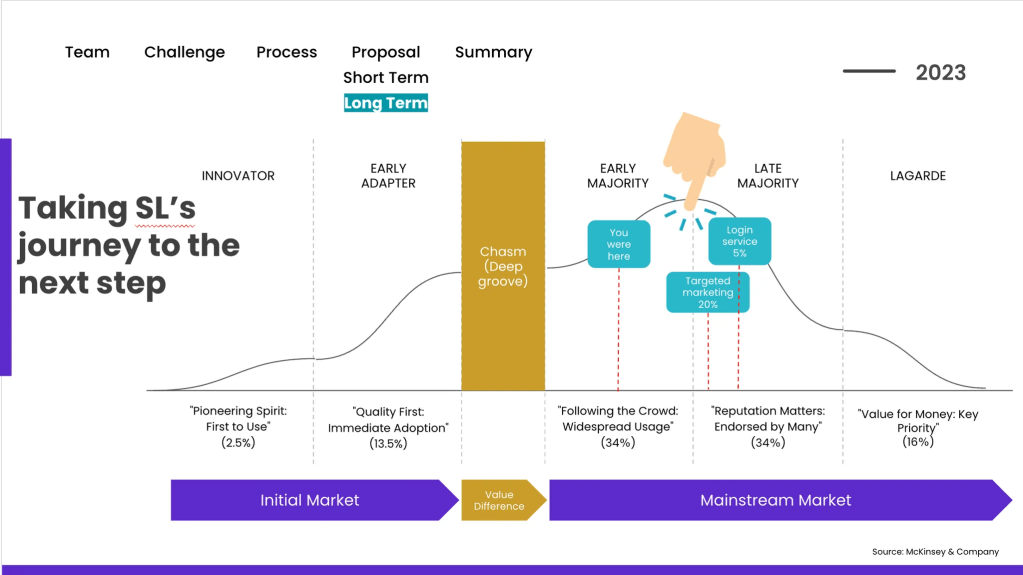
Bridging the Adoption Chasm for SL’s App
Revisiting the Chasm Theory, it is evident that despite the marketing campaign’s impact, SL’s app adoption is still in the “Early Majority” phase. Our goal is not to stop here. We aim to help SL reach the “Late Majority” phase, achieving widespread adoption.
To do this, we need to address the issues of the app not providing enough value and the high barriers to usage. Solving these challenges will be key to driving further adoption and ensuring success.
Summary: Digital Revolution in Transportation
Short-term Marketing awareness campaign in Stockholm public transport system will increase app sales with at least 6,3%
Long-term Transforming SL into a data-driven company will open up for continuous opportunities to improve the app usage, add user desired features and personalisation & optimations.
Project Framework and Key Findings

In this project, we employed the design thinking framework to provide a comprehensive overview. Here are the key findings from our research:
Ethnographic Research
- Diverse Age Groups Using Agents: People of all ages continue to purchase tickets from agents.
- Group Behavior: Individuals tend to use the same ticket types as their peers or others at the same station.
Desktop Research
- Low Awareness of App Features: There is limited awareness that 30-day tickets are available in the app.
- Current App Usage: Currently, 35-40% of tickets are purchased through the app.
- Lack of Demographic Data: There is insufficient demographic information on purchasing behavior.
- Absence of Awareness Campaign: No significant awareness campaign has been conducted for the app.
Personal Reflection
I believe the key to long-term success is the effective use of data within the organization. Data-driven decision-making will enable the company to identify opportunities, optimize operations, and enhance customer experiences, ensuring sustainable growth and competitiveness in the market, which drive Business Transformation.
Reference
Mithun Sridharan (2017), Crossing the Chasm
*https://thinkinsights.net/strategy/crossing-the-chasm/*
Maria Rosil (2021) The Future of IoT: How IoT Brings Value Across Industries
*https://euristiq.com/future-of-iot/*
ClearChannel (2023) “Transit”
*https://www.clearchannel.se/områden/transit/*
Erik Ries (2011) “The Lean Startup”
Malcolm Larri (2023)
Hyper Island, Hustle & Serve Session
Dr. Justin Bracken (2021) “Digital Transformation, How to Make it Work?”
*https://www.linkedin.com/pulse/digital-transformation-how-make-work-dr-justain-bracken/*
Clayton Christensen, (1997) The Innovator’s Dilemma”
Dafna Ben-Yehoshua (2016) “How KLM convinced clients to book flights on it’s mobile app”
*https://www.angoramedia.com/blog/klm-mobile-app-campaign*
Ruter årsrapport 2021
*https://aarsrapport2021.ruter.no/en/year-2021/new-app-offering-enhanced-user-experience*
KLM Tech & Data (2023)
*https://techdata.klm.com/en/about/*
McKinsey & Company
*https://www.mckinsey.com/capabilities/growth-marketing-and-sales/how-we-help-clients/clm-online-retailer*
Kali Mogg (2022) “Breaking Down the Elements of Business Transformation
*https://www.standleys.com/blog/elements-of-business-transformation#:~:text=While such features may be,plan out and create change*
 be. design lab
Leave a comment