Improved efficiency in university spaces
Problem Statement
Transforming Public Real Estate to a Digital World The Insights
Question of Design
We translate our clients’ problem statements into a design challenge by asking
“How Can We Strengthen The Learning, Working, Research or Innovation Experience?”
Implementation
Solution#1 : Conversations
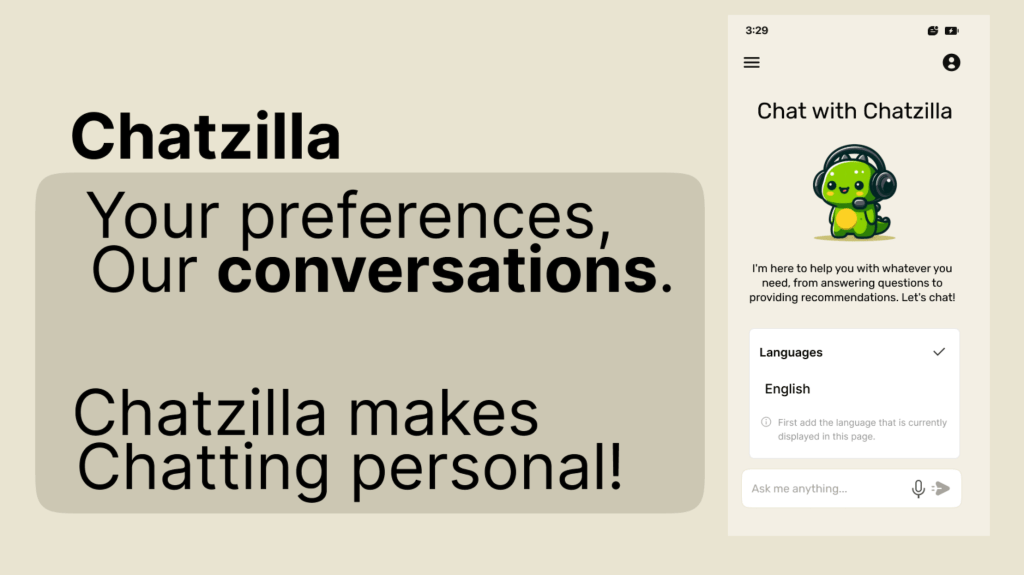
Chatzillar is a chatbot platform designed to enhance user interaction through the following key features:
- Approachable & Personalized Chatzillar provides a friendly and courteous interface, retains user interaction history, and tailors conversations to individual preferences.
- Supportive & Empathetic Incorporating a touch of humor, Chatzillar delivers assistance in clear, straightforward language, promoting engaging and patient dialogues.
- Secure & Adaptive Chatzillar prioritizes privacy, safeguards personal data, and evolves continuously based on user feedback.
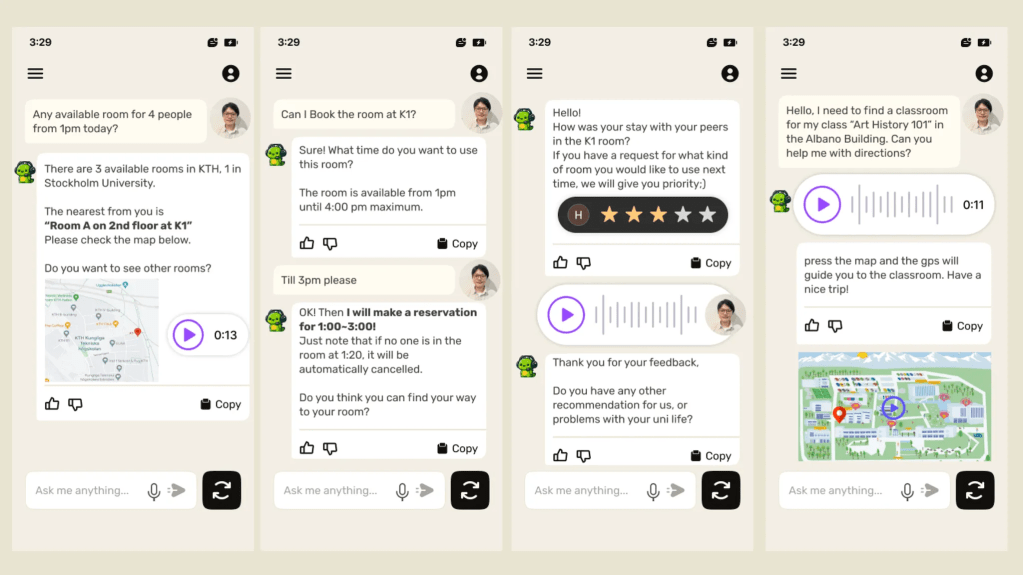
What Can Chatzillar Do?
- Multilingual Communication: Communicate effectively in any language.
- Campus Navigation: Provide classroom locations and GPS-guided directions.
- Study Room Management: Check availability and make reservations for study rooms.
- Facility Information: Answer general questions about campus facilities.
Additional Capabilities
- Classmate Connectivity: Utilize the chatbot as a sensor to connect with classmates.
- Mental Health Support: Detect stressed or depressed voices and suggest psychological assistance.
- Listening Support: Offer a sympathetic ear for common student issues.
Value for Students
- Reduced Cognitive Load: Simplify and streamline student tasks.
- Community Building: Foster a sense of community and connection.
- Enhanced Belonging: Strengthen students’ sense of belonging on campus.
Value for Akademiska Hus
- Behavioral Insights: Understand student behavior through social data visualization.
- Informed Decision-Making: Leverage big data to make evidence-based decisions and smart investments.
- Improved Student Experience: Cultivate closer relationships with students.
Solution#2 : Data Gathering
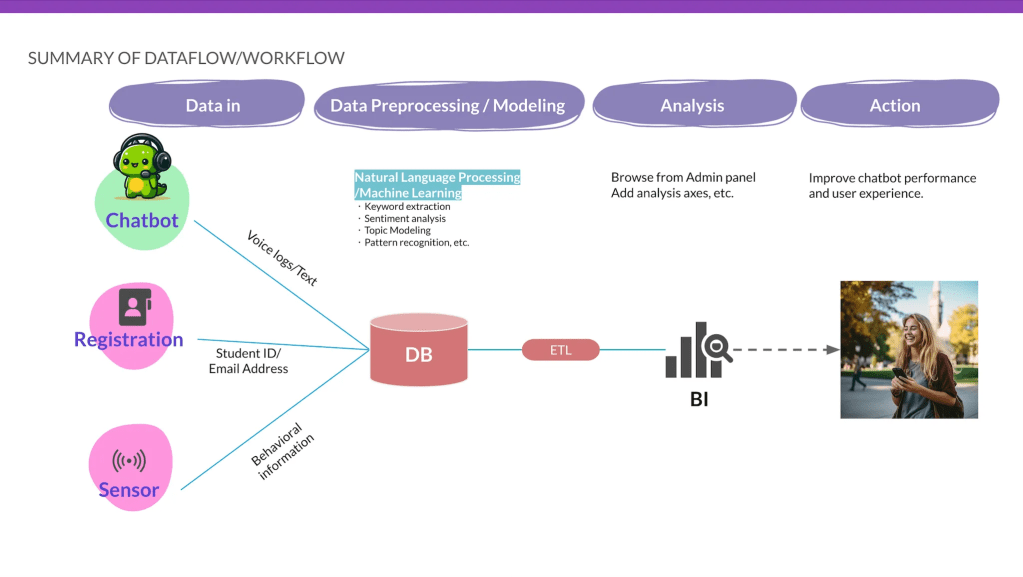
How It Works
- Capturing Dense Data: Focus on collecting detailed data on user behavior, going beyond just big data.
- Establishing a User Research Team: Form a dedicated team to continuously uncover insights, fostering a data-driven culture at Akademiska Hus.
- Enhancing the Experience: Transition from being merely a building company to becoming an experience-oriented organization.
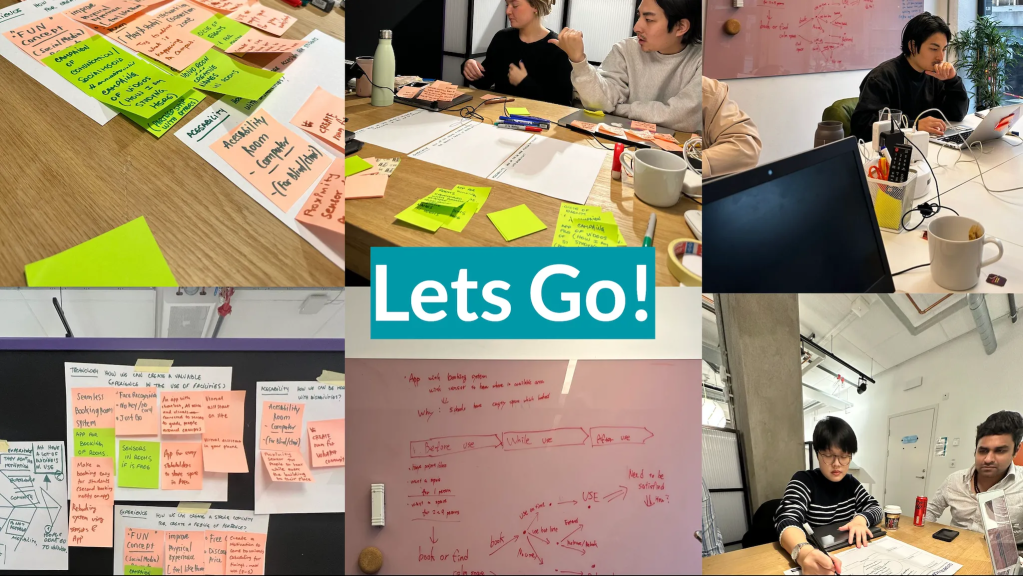
Ideation
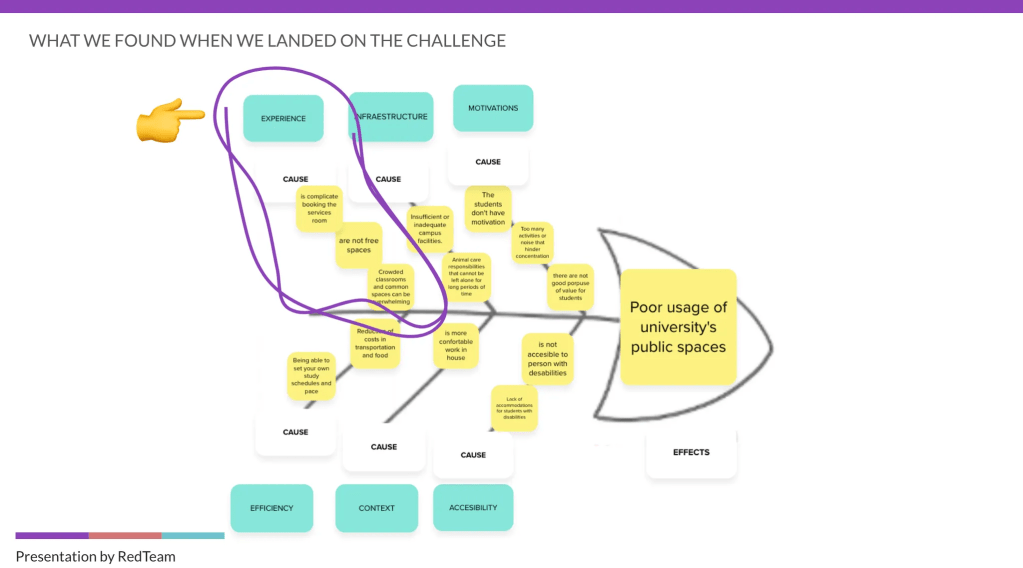
We encountered significant challenges in accessing data about the target audience and understanding the complexity of the problem. To address these issues, we grouped the problems using an Ishikawa diagram. We utilized agile research methodologies, including anticipatory anthropological approaches, scholarly analysis, and expert consultations, to enhance our effectiveness.
Our findings were categorized into two main factors:
- Space Utilization
- Enhancing the comfort of using spaces.
- Increasing awareness of where study rooms are located.
- Facilitating the advance booking of rooms for study and work at the university.
- Community Feeling
- Fostering connections among students.
- Strengthening the sense of belonging to the university when solving problems.
Final Thoughts
As the first step towards our solution, we propose creating a chatbot platform to facilitate information exchange between users and space owners. Additionally, we will leverage student information for analysis purposes. For a comprehensive long-term plan, we recommend integrating technology into physical spaces to collect accurate data in parallel with system operations. This approach will ensure precise data collection, leading to effective data preprocessing and modeling. Ultimately, this will enable the creation of a business intelligence (BI) dashboard for easy data utilization and actionable insights.
Reference
Paredes, Rob. 2024. Ishikawa Diagram: A Guide on How to Use It | SafetyCulture [Online] Available at:https://safetyculture.com/en/library/topics/quality/ishikawa-diagram [Accessed 2023-11-19].
 be. design lab
Leave a comment